
How to choose a painting contractor in Westchester County
Use this Westchester homeowner checklist to compare painting contractors, proposals, insurance, preparation, communication, warranties, and warning signs.
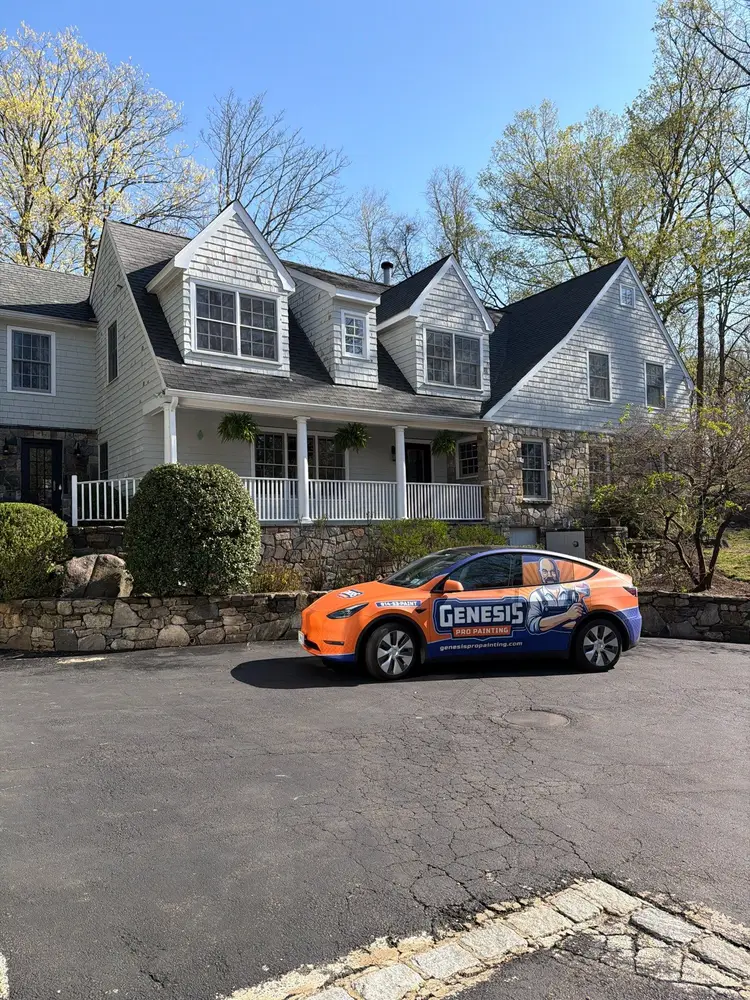
Choosing a painting contractor in Westchester County is not simply a matter of collecting three prices and selecting the middle one. The proposals may describe very different levels of preparation, repair, protection, supervision, and finish work.
You are also deciding who will work inside or around your home, who will be responsible when conditions change, and whether the finished work will still look right years later. The questions below help you compare painting contractors on the work they are actually proposing—not just the number at the bottom of the estimate.
Start with an on-site walkthrough
A dependable proposal begins with someone seeing the property. Photos and measurements can help with early planning, but they cannot show every surface condition, access issue, repair, or protection requirement.
During a walkthrough, the contractor should look closely at the areas being painted and ask useful questions:
- Which walls, ceilings, trim, doors, cabinets, or exterior surfaces are included?
- Are there cracks, stains, peeling paint, failed caulk, damaged drywall, or deteriorated wood?
- Will the home be occupied while the work is underway?
- Are colors changing dramatically?
- Are there tall foyers, stairwells, steep grades, landscaping, or other access concerns?
- Is there a deadline connected to moving, listing the house, hosting an event, or reopening a business space?
An immediate whole-project price without enough inspection may leave important work undefined. Those omissions often return later as change orders, delays, or compromises in preparation.
Compare the written scope, not only the price
Two painting estimates are comparable only when they include the same work. One proposal may include repairs, spot priming, two finish coats, detailed protection, and daily cleanup. Another may simply say “paint rooms” or “paint exterior.” Those are not competing prices for the same project.
A clear painting proposal should identify:
- The rooms, elevations, and surfaces included
- The preparation and visible repairs included
- Whether primer is required and where it will be used
- The expected number of finish coats
- Paint products and sheen levels
- Protection for floors, furniture, landscaping, roofing, fixtures, and adjacent areas
- Cleanup and disposal responsibilities
- The estimated schedule and working hours
- How additional work or concealed damage will be approved
- The warranty and any exclusions
- Anything specifically not included
If you are still developing a realistic budget, our guides to interior painting costs in Westchester County and exterior painting costs in Westchester County explain why preparation, repairs, access, and project scope affect the estimate.
Verify insurance before work begins
Ask the contractor to provide current insurance documentation rather than relying on a verbal assurance. The appropriate coverage depends on the business and project, but homeowners should ask about general liability coverage and workers’ compensation coverage for the people performing the work.
The name on the proposal, the business receiving payment, and the company shown on the insurance documents should make sense together. If subcontractors will be used, ask who supervises them and who remains responsible for their work.
This is not paperwork for paperwork’s sake. It clarifies responsibility before ladders, equipment, employees, and materials arrive at your property.
Ask who will manage your project
The person who prepares the estimate may not be the person on site each day. Before signing, ask:
- Who is my primary point of contact?
- Who supervises the crew and checks the work?
- How will schedule changes or questions be communicated?
- Will I receive progress updates?
- Who approves repairs or additional work?
- Who conducts the final walkthrough?
Consistent project management matters on a one-room project, and it becomes essential during a whole-house interior, detailed exterior, cabinet refinishing project, or occupied commercial interior. A homeowner should not have to explain the same concern to a different person every morning.
Understand exactly what preparation is included
Preparation is often where painting proposals differ most. Finish paint cannot correct a loose, dirty, damaged, or unstable surface underneath it.
For an interior project, preparation may include protecting floors and furnishings, filling holes, repairing cracks, sanding rough areas, caulking gaps, treating stains, and priming repairs. For an exterior, it may include washing, scraping, sanding, spot priming, replacing failed caulk, and addressing deteriorated wood.
Ask the contractor to describe the preparation in specific terms. “Prepare as needed” is difficult to compare or enforce. Our guide to why preparation determines how a paint job ages explains why this part of the proposal has such a large effect on durability.
Discuss repairs before they become surprises
Painting often uncovers conditions that need more than paint. Interior walls may have damaged drywall, loose tape, water stains, or cracked plaster. Exterior trim may contain soft or deteriorated wood that only becomes obvious after scraping begins.
Ask what visible repairs are included and how concealed damage will be handled. A professional answer should explain the process for documenting the condition, pricing additional work, and obtaining approval before proceeding.
Genesis Pro Painting can coordinate drywall repair and carpentry repair with the painting scope when those corrections are needed. Keeping the repair and finish work coordinated helps prevent disputes over who is responsible for the final surface.
Ask about products, primer, coats, and sheen
Brand name alone does not define the quality of a coating system. The product must match the surface, exposure, existing finish, and intended use.
Ask which products are planned for walls, ceilings, trim, cabinets, siding, or masonry and why they were selected. Confirm whether primer is included, how many finish coats are expected, and which sheen will be used on each surface.
A contractor should also be able to explain special situations such as covering a deep color, painting previously oil-coated trim, refinishing cabinets, or coating exterior surfaces exposed to shade and moisture. The answer should be connected to the actual condition of your project—not simply “this is the paint we always use.”
Look at protection, cleanup, and daily organization
Homeowners usually focus on the finished color. The experience of living through the project depends just as much on protection and organization.
For interior work, ask how floors, furniture, fixtures, countertops, and adjoining rooms will be protected. Find out whether occupied spaces will be reset at the end of each day and how dust or sanding debris will be contained.
For exterior work, ask about landscaping, windows, stonework, roofing, decks, walkways, lighting, and neighboring property. Materials and debris should be stored safely, and work areas should not be left disorganized between days.
Cleanup should be part of the written scope, not an assumption.
Confirm the schedule and how delays are handled
A responsible contractor should provide an expected start window and project duration while being honest about conditions that can change the schedule.
Exterior projects depend on rain, humidity, surface moisture, and temperature. Interior projects are more predictable, which makes late fall and winter a practical time for interior painting in Westchester County. If you are planning winter work, ask about ventilation, daily access, occupied-room sequencing, and how the crew will protect the rest of the home.
The important question is not whether a contractor promises that nothing will change. It is how they communicate and manage the project when something does.
Review recent work and patterns in customer feedback
Ask to see recent projects similar to yours. An exterior wood home, a detailed interior with extensive trim, and a cabinet refinishing project require different preparation and application skills.
When reading reviews, look for patterns rather than one perfect sentence. Useful feedback mentions communication, protection, punctuality, preparation, cleanliness, problem-solving, and how the company handled the final walkthrough or a concern.
References and photographs are more meaningful when they relate to similar work and local housing conditions. Experience with Westchester homes matters because properties across Katonah, Bedford, Chappaqua, Mount Kisco, Bedford Hills, Goldens Bridge, and Armonk vary considerably in age, materials, architectural detail, terrain, and access.
You can review our painting service areas and see completed work in the Genesis Pro Painting portfolio.
Warning signs when hiring a painter
Slow down if you encounter any of the following:
- A price that is substantially lower without a clear scope explanation
- Pressure to sign immediately or a discount that expires the same day
- A deposit that appears disproportionate to the scheduled work
- No written scope, or a description so vague that it could apply to any project
- Refusal to provide current insurance documentation
- No clear answer about who supervises the crew
- Unwillingness to explain preparation, products, or the number of coats
- No process for approving repairs or change orders
- Reluctance to provide references or show relevant recent work
- Promises that older surfaces will need no repairs before they have been inspected
A professional contractor should be comfortable explaining the proposal. Reasonable questions are part of planning the work, not an inconvenience.
Should you buy the paint yourself?
Usually, the contractor should supply the coatings specified in the proposal. That keeps responsibility for product selection, compatibility, quantity, and application with the company performing the work.
If you prefer a particular manufacturer or product line, discuss it during the walkthrough. The final proposal should state the agreed products and sheen levels so there is no confusion after the project begins.
Questions to ask before signing a painting contract
Use this final checklist when comparing contractors:
- What surfaces and rooms are included?
- What preparation and repairs are included?
- Which primer, paint products, and sheen levels will be used?
- How many finish coats are expected?
- How will the home and surrounding property be protected?
- Who will manage the project and communicate with me?
- How are concealed conditions and change orders handled?
- What is the expected start window and duration?
- What insurance documentation can you provide?
- What warranty is included, and what does it cover?
- Can I see recent work similar to this project?
- What is specifically excluded from the proposal?
Choosing a painting contractor in Westchester County
The best proposal is the one that makes the work understandable before it begins. You should know what will be prepared, repaired, painted, protected, supervised, and warranted.
Genesis Pro Painting has served Westchester homeowners since 2004, with painting experience dating back to 1998. Our process includes an on-site consultation, a written scope, dedicated project management, careful preparation and protection, and a final walkthrough. We provide interior painting, exterior painting, cabinet refinishing, repairs, and color guidance for homes throughout our service area.
If you are comparing painting contractors or planning work for the coming winter, schedule a consultation or call (914) 537-2468. We will walk the property with you, explain the scope, and provide a written proposal for the work your home actually needs.
Planning a painting project?
Book a professional, no-pressure consultation with Genesis Pro Painting.
Schedule a Consultation