
What affects exterior painting costs in Westchester County?
Learn how siding condition, preparation, repairs, access, coatings, and project scope affect the cost of exterior house painting in Westchester.
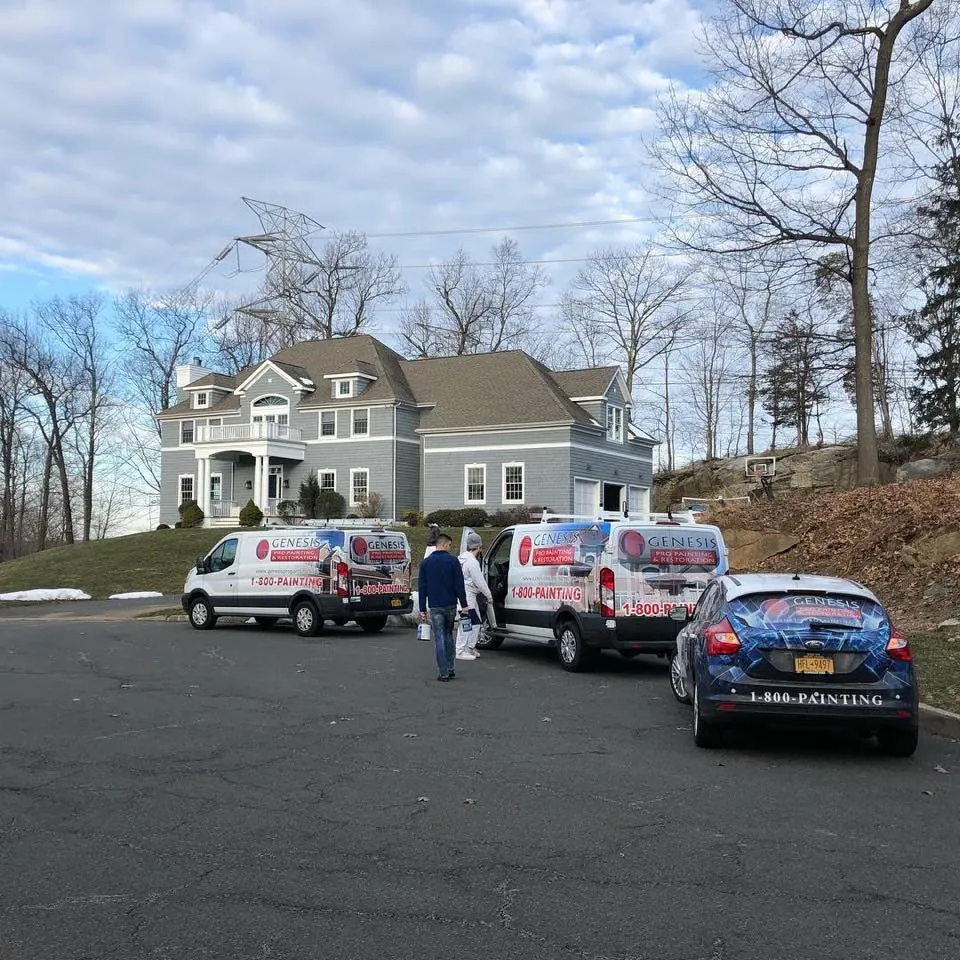
The cost of exterior painting in Westchester County cannot be estimated accurately from square footage alone. Two houses of similar size can require very different amounts of preparation, repair, access equipment, materials, and labor.
That is why Genesis Pro Painting begins with an on-site consultation. We inspect each elevation, look closely at the condition of the siding and trim, identify access challenges, and define what is included before preparing a written proposal.
Why exterior painting estimates vary so much
Exterior paint is exposed to sunlight, rain, snow, humidity, temperature changes, and moisture from nearby trees and landscaping. Those conditions do not affect every side of a house equally.
A shaded north elevation may hold moisture and develop mildew. A sunny south or west elevation may fade and crack sooner. Window sills, fascia, corner boards, and trim close to roofs or masonry often deteriorate before broad areas of siding.
The real cost is therefore determined by the work needed to create a sound, paint-ready surface—not simply by the amount of paint required.
The factors that affect an exterior painting estimate
Siding material
Different exterior materials require different preparation and coatings.
- Wood clapboard and shingles may need washing, scraping, sanding, spot priming, caulking, and repair before painting.
- Vinyl siding must be cleaned properly and coated with a compatible product. Color selection matters because some darker colors can create excessive heat.
- Aluminum siding may have oxidation or chalking that must be removed before applying the appropriate coating.
- Stucco requires attention to cracks, moisture, and coating breathability.
- Brick and masonry need careful evaluation because painting them is a long-term decision and trapped moisture can create problems.
The type of siding establishes the starting point, but its condition determines how much work will be required.
Existing paint condition and preparation
Preparation is frequently the largest variable in an exterior house painting estimate. Loose and peeling paint must be removed back to a sound edge. Glossy surfaces may need sanding. Bare areas need the correct primer, while failed caulk and open joints must be addressed before finish coats are applied.
A house with mostly sound paint may need cleaning, selective scraping, spot priming, and caulking. Another house of the same size may have widespread failure requiring extensive scraping and sanding. Those are completely different scopes of work.
Our article about why preparation determines paint longevity explains why this work matters long after the project is finished.
Carpentry repairs and hidden deterioration
Exterior painting often reveals deterioration that is not obvious from the driveway. Common problem areas include window sills, trim ends, fascia, soffits, corner boards, porch components, and wood that meets a roof or masonry surface.
Painting over soft or rotten wood does not solve the problem. The damaged material must be repaired or replaced before it can hold a lasting finish. When needed, we can coordinate exterior carpentry repairs with the painting scope instead of leaving the homeowner to schedule separate contractors.
A clear proposal should explain which visible repairs are included and how additional concealed damage will be handled if it is discovered after preparation begins.
House height and access
A one-story home on level ground is easier to stage than a multi-story house with steep rooflines, dormers, narrow side yards, sloping terrain, or limited ladder placement.
Access conditions can require additional equipment, setup time, and safety planning. Mature landscaping, patios, pools, stone walls, and delicate roofing also increase the amount of protection and controlled access needed.
Homes throughout Bedford, Chappaqua, and Armonk often combine height, detailed architecture, established landscaping, and extensive trim. Those features can affect labor more than the home's footprint suggests.
Washing and surface contamination
Paint should not be applied over dirt, mildew, chalking, or loose material. Proper washing creates a clean surface and also makes defects easier to see during the final preparation review.
The process and pressure must match the surface. Aggressive washing can damage wood, force water behind siding, or scar softer materials. Learn more about pressure washing before exterior painting and our professional pressure washing service.
Color changes, primer, and number of coats
Staying close to the existing color is usually more straightforward than making a dramatic change. Moving from a dark body color to a light one—or changing deep trim colors to white—may require a specific primer or additional finish coats for even coverage.
Some color changes also expose areas that were previously hidden behind gutters, shutters, fixtures, or overlapping siding. The estimate should clearly state the expected coating system and number of coats rather than leaving that decision until work is underway.
Trim and architectural detail
Broad siding areas generally move faster than windows, doors, shutters, railings, columns, porches, decorative brackets, and detailed trim.
Older Westchester homes may have extensive architectural details that require careful scraping, sanding, caulking, masking, and brushwork. A smaller house with elaborate trim can require more labor than a larger house with simple elevations.
Lead-safe preparation on older homes
Homes built before 1978 may contain lead-based paint beneath newer coatings. When painted surfaces are disturbed, the project may require additional testing, containment, cleanup, and lead-safe work practices.
Older housing is common across Katonah, Bedford, Bedford Hills, Chappaqua, Mount Kisco, Goldens Bridge, and Armonk. The possibility of older coatings should be discussed during the walkthrough rather than discovered after work begins. Our guide to lead paint in older Westchester homes provides more background.
Protection and cleanup
Exterior painting also includes protecting the property around the house. Landscaping, windows, roofing, stonework, walkways, decks, outdoor furniture, lighting, and mechanical equipment may all require protection.
Daily cleanup, organized material storage, and responsible containment of paint debris are part of a professional exterior project. They require labor, but they also reduce disruption and protect the home while work is underway.
What can reduce the total project cost?
Several decisions can make an exterior painting project more efficient without sacrificing the quality of the work:
- Schedule maintenance before peeling and exposed wood become widespread
- Address roof, gutter, and drainage problems before painting
- Stay reasonably close to the existing color
- Complete related siding, trim, and repair work during one mobilization
- Remove or relocate movable outdoor items before the crew arrives
- Make color decisions before the scheduled start date
The biggest savings usually come from maintaining the exterior before failure becomes severe. Scraping and repairing widespread damage costs considerably more than repainting a surface that is still sound.
How to compare exterior painting proposals
A low number and a complete scope are not always the same thing. When comparing estimates, confirm that each proposal addresses the same work.
A clear exterior painting proposal should identify:
- The elevations and surfaces included
- Washing and preparation methods
- Visible carpentry repairs
- Primer and expected finish coats
- Paint products and sheen levels
- Windows, doors, shutters, railings, and other detailed components
- Access equipment and property protection
- Cleanup and debris handling
- How concealed damage or additional work will be approved
- The expected schedule and weather considerations
- Anything specifically excluded
If one proposal includes extensive preparation and repairs while another says only "paint exterior," the prices are not describing the same project.
Why a Westchester walkthrough matters
Homes in northern and central Westchester vary widely in age, materials, terrain, and architectural detail. An exterior painting estimate should reflect the actual property—not a generic price pulled from an online calculator.
During a Genesis Pro Painting consultation, we walk the elevations, inspect the coating condition, probe vulnerable wood where appropriate, review access and protection needs, and discuss colors and timing. We then provide a written proposal that explains the scope.
Explore our exterior painting services or schedule a consultation. You can also call (914) 537-2468 to arrange an on-site exterior painting estimate in Westchester County.
Planning a painting project?
Book a professional, no-pressure consultation with Genesis Pro Painting.
Schedule a Consultation