
Interior and exterior paint are not the same product
Why you cannot use one for the other, what each is engineered for, and where residential and commercial work differ.
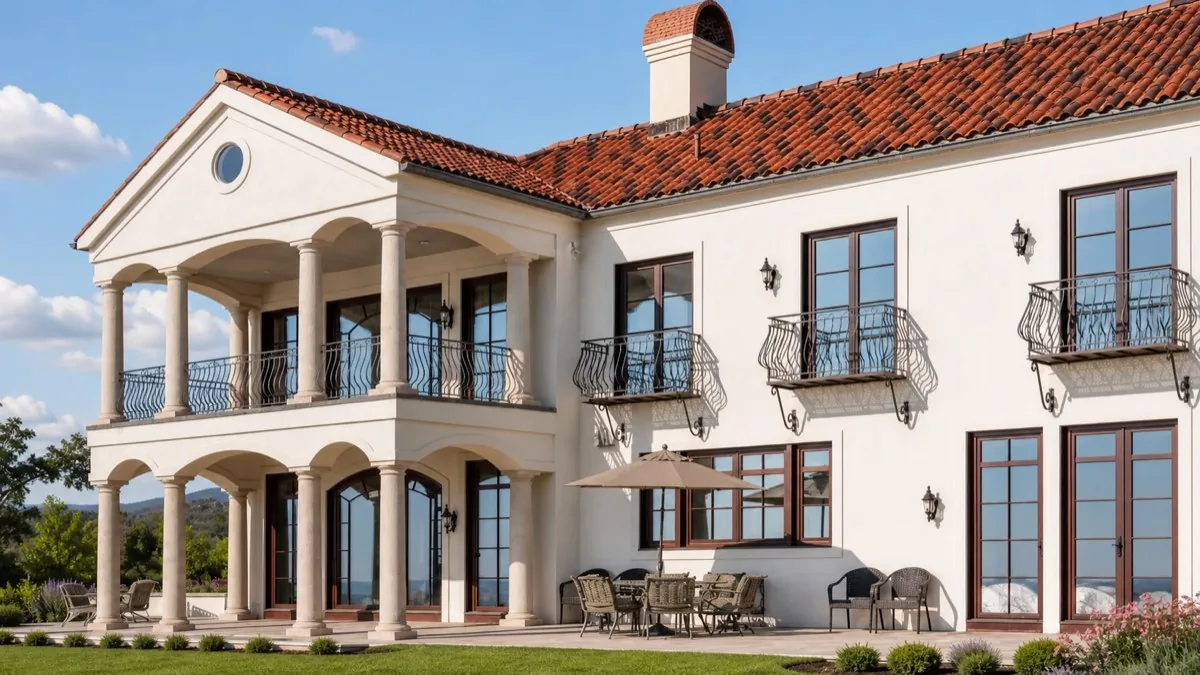
They look identical in the can. They are formulated for completely different jobs.
What exterior paint is built for
Movement. Exterior wood expands and contracts through the seasons: sometimes dramatically between a February night and a July afternoon. Exterior coatings use flexible binders that stretch with it. A rigid film on siding cracks within a couple of seasons.
UV. Sunlight breaks down binders and fades pigment. Exterior products carry UV-resistant resins and more light-stable pigments.
Water and mildew. Additives resist mildew growth and the film is engineered to shed water while still letting some vapour out.
The trade-off: those additives and flexible binders mean exterior paint off-gasses more, is softer, and is not formulated for scrubbing.
What interior paint is built for
Being touched and washed. Interior finishes are harder and hold up to cleaning.
Low odour and low emissions, because the room is occupied.
Appearance. Interior products level better and offer a much wider range of sheens, because interior surfaces are looked at closely under raking light.
The trade-off: no meaningful UV protection and a rigid film that will crack on a surface that moves.
Why you cannot swap them
Interior paint outside fails quickly. It chalks, fades, and cracks as the substrate moves. Usually within a season or two.
Exterior paint inside is the less obvious mistake and the more unpleasant one. It is softer, so it marks and cannot be cleaned properly, and the mildewcides and higher emissions are not something you want in an occupied room.
What about porches, garages, and sunrooms?
The rule is exposure, not whether there is a roof.
- Covered porch ceilings and walls: exterior product. They see humidity, temperature swings, and movement.
- Garage interiors: interior paint on the walls in most cases, though anything that gets wet or takes contact wants a higher sheen. Garage floors are a different problem entirely: see basements and garages.
- Sunrooms and enclosed porches: depends on whether they are heated. Unheated, treat them as exterior.
- Window sashes and exterior doors: exterior product on the outside face, interior on the inside face. The same door genuinely wants two different products.
Residential and commercial
The same principles apply, but the constraints differ. Commercial work is usually driven by scheduling around occupancy and by durability requirements in corridors and high-traffic areas, which pushes toward harder finishes and higher sheens than a house would use.
Our nine services are built around residential work: interior and exterior painting for homeowners across Westchester and Fairfield. Which product goes on which surface is specified per surface at the walkthrough, not chosen as a house-wide default.
Planning a painting project?
Book a professional, no-pressure consultation with Genesis Pro Painting.
Schedule a Consultation