
Wallpaper: removing it, or painting over it
When wallpaper can be painted over and when it has to come off, how removal actually goes, and what the wall needs afterwards.
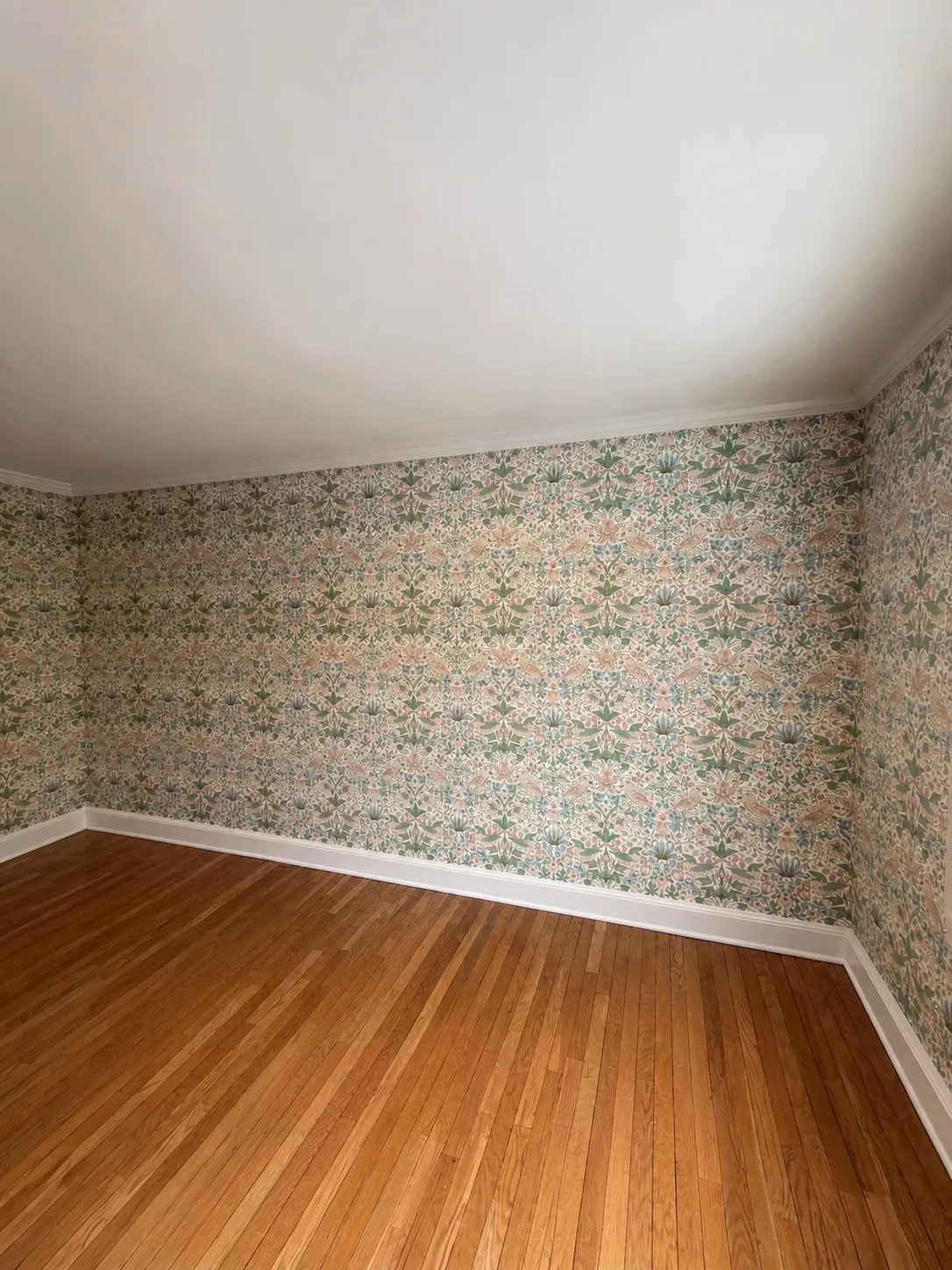
The question comes up on most older houses, and the honest answer is that removing it is almost always right, but not always.
When you can paint over wallpaper
It can work if all of these are true:
- The paper is bonded everywhere, with no lifting seams, bubbles, or loose corners
- It is smooth, not textured, embossed, or grasscloth
- It is a single layer
- It is not vinyl, which paint will not bond to without a specific primer
Even then, the seams usually remain faintly visible, and the decision is close to permanent: painted wallpaper is far harder to remove later than the paper was on its own.
The realistic case for painting over is a wall where the plaster underneath is known to be poor, and removal risks doing more damage than the paper is causing.
When it has to come off
Any lifting, any bubbling, texture, multiple layers, or a wall you want genuinely flat. Also: any time the paper is old enough that you do not know what is under it.
Painting over a lifting seam does not fix it. The moisture in the paint softens the adhesive, and within days the seam opens wider than it was.
How removal actually goes
Score, soak, wait, scrape. A scoring tool perforates the face so that water or stripping solution can reach the adhesive. Then it needs to sit. This is the step people rush, and rushing it turns a straightforward job into a wall full of gouges.
Steam speeds it up considerably on stubborn paper.
Some paper comes off in whole sheets and feels miraculous. Some comes off in postage stamps. You do not know which until you start, which is why removal is scoped as a range rather than a fixed number.
What the wall needs afterwards
This is the part that gets underestimated. Behind the paper you will find:
- Adhesive residue, which has to be washed off completely. Paint over old paste and it stays tacky and eventually crazes.
- Torn paper facing where the scraper caught the drywall. That needs patching and skimming.
- Whatever the paper was hiding: old repairs, cracks, and the texture of a wall that has never been finished for paint.
A wall that has had paper on it since the 1980s usually needs a skim coat, not just a patch, before it will take paint and look flat.
Then prime. Bare drywall facing, joint compound, and any remaining adhesive all absorb differently, and a bonding primer levels that out. Skipping it produces a patchwork of dull and shiny areas through the finish coat.
If you are putting new paper up
Preparation matters as much as it does for paint: a smooth, primed, sound wall is what makes the seams disappear. More on our wallpaper installation page.
Planning a painting project?
Book a professional, no-pressure consultation with Genesis Pro Painting.
Schedule a Consultation