
The mistakes that make a paint job look amateur
Cut lines that band, tape pulled at the wrong time, sheen mismatch on touch-ups: the errors that show up later, and spraying versus brushing.
Most bad paint jobs are not bad painting. They are good painting done in the wrong order, or finished too quickly.
The banded cut line
Cutting the edges of a whole room first and rolling afterwards is the most common error there is. By the time the roller arrives, the brushed edge has dried, and the two set at different rates: leaving a visible frame around every wall that only appears once the paint has cured.
Cut and roll one wall at a time, into a wet edge.
Pulling tape at the wrong moment
Tape pulled after the paint has fully hardened tears the film along the edge. Tape left on for days bonds and takes the finish with it.
Pull it while the paint is still slightly soft, and pull it back on itself at a shallow angle, slowly. If a line has already sealed, score it with a blade first.
Better still, on trim, cut freehand. A steady brush line is cleaner than tape and it does not bleed.
Touch-ups that do not blend
Touch-up paint from the same can, applied a year later, still shows. Two reasons: the wall has aged and the touch-up has not, and a small brushed patch has a different sheen from a rolled wall even in identical paint.
The fix is to touch up to a break (a corner, a trim line) rather than feathering into the middle of a wall.
Painting over problems
Mildew, grease, chalking, loose paint, and water stains all come back. Every one of them needs to be removed or sealed, not coated. See why preparation decides how a job ages.
Loading the brush wrong
Too much paint runs at the edges; too little drags and leaves brush marks. Load a third of the bristle length and tap rather than wipe on the rim.
Skipping the second coat because it "looks fine"
One coat looks fine on the day. It has less film thickness, so it wears faster and it fails first anywhere that gets touched or wet.
Spraying versus brushing on an exterior
Both are legitimate; they are not interchangeable.
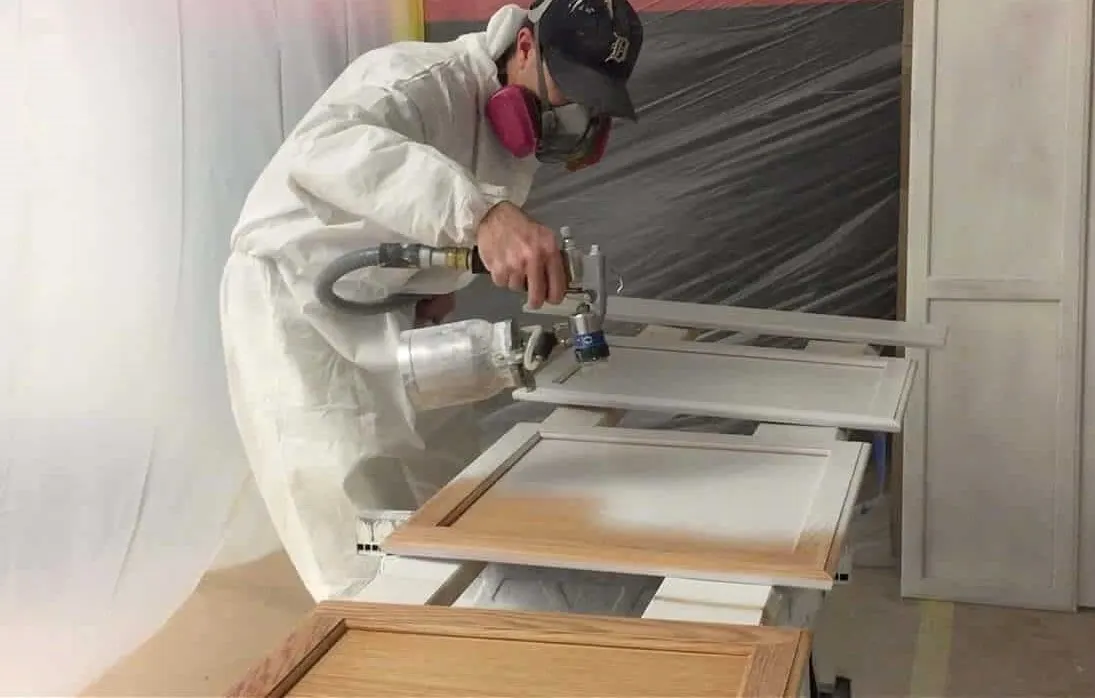
Spraying puts down an even film quickly and gets into shingle courses, shakes, and profiled trim that a brush cannot reach cleanly. It requires far more masking, and on a windy day it puts paint where nobody wants it.
Brushing and rolling works the coating into the surface, which matters on weathered wood, and it needs no masking of the neighbourhood.
The method most exteriors actually want is back-brushing: spray to apply, then immediately brush it in. That gets the coverage of a sprayer and the adhesion of a brush. On a house with mature plantings tight to the siding, brushing alone is often simply the more considerate choice.
The right answer changes by surface, and it is decided at the walkthrough rather than by preference.
Planning a painting project?
Book a professional, no-pressure consultation with Genesis Pro Painting.
Schedule a Consultation