
How to paint a room properly
The order of operations that produces a clean room, from clearing and protecting through to the last cut line.
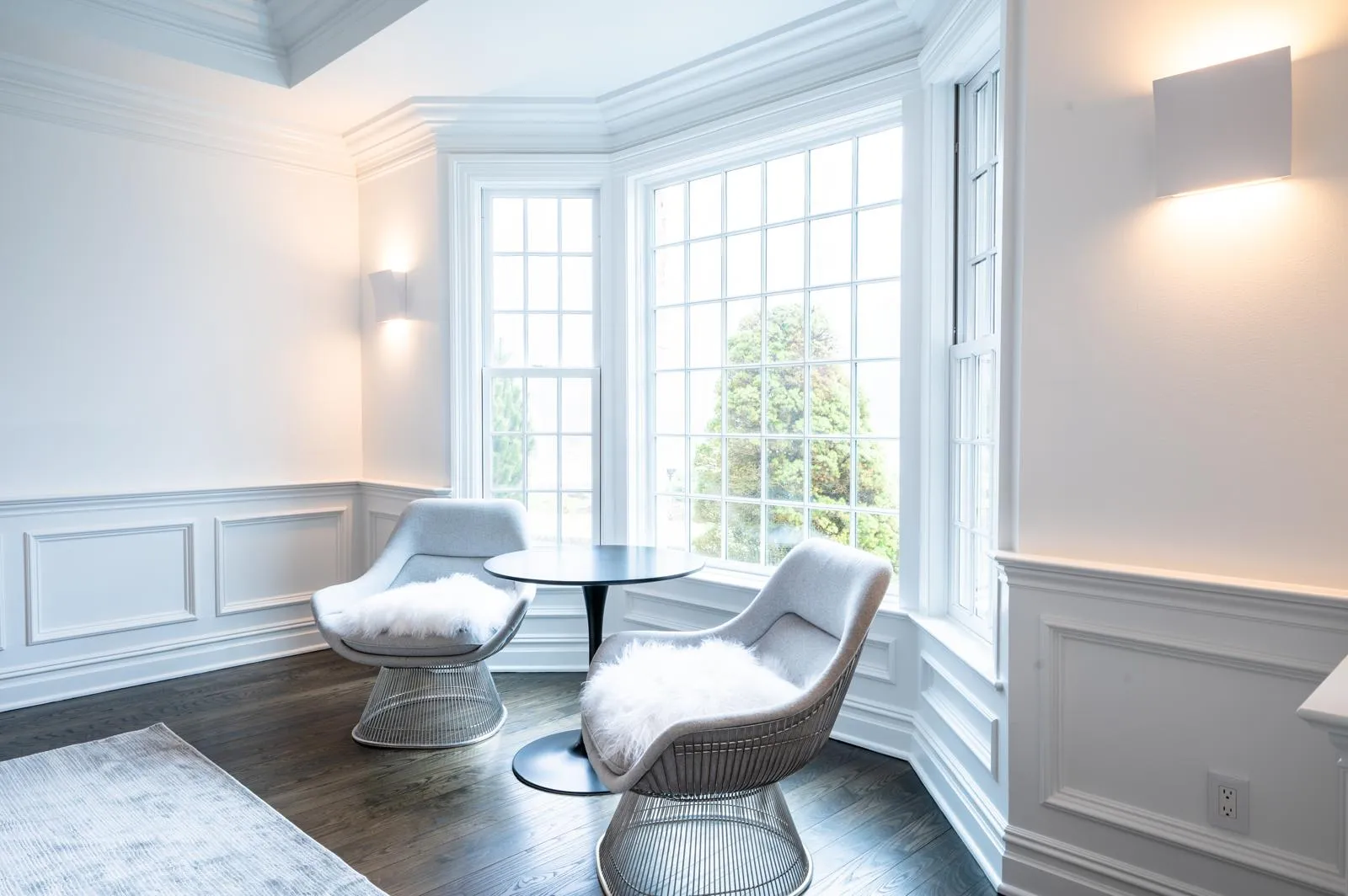
Painting a room is not hard. Painting a room so that it still looks sharp when the light rakes across it in February is a matter of sequence: doing things in the right order, and not moving to the next step early.
Clear and protect first
Everything out that can come out. What stays goes to the middle and gets covered completely, not draped. Take down switch plates and vent covers rather than cutting around them; the ten minutes saves an hour of fiddly work and looks better.
Floors get covered wall to wall, not just where you expect to stand. Most floor damage on a paint job happens where nobody planned to be.
Repair, then sand, then clean
In that order. Fill nail holes and cracks, let the filler dry fully, then sand it flush. Sanding first and filling second leaves proud patches.
Then wash the walls. Dust is invisible and it is everywhere, especially along baseboards and above radiators. Kitchens and bathrooms need degreasing, not just dusting.
Prime what needs it
Bare drywall, patched areas, water stains, and any big color change. Repairs absorb paint differently from the wall around them: without primer they show through the finish as dull patches, and no amount of extra topcoat fixes it.
Ceiling, then walls, then trim
This order exists because of gravity and overspray. The ceiling drips onto the walls, so it goes first. Trim goes last because it is the most visible and you want a clean edge cut into a finished wall, not the other way round.
Cut in, then roll: one wall at a time
Cut the edges of a wall and roll it while the cut line is still wet. If the cut dries before the roller reaches it, the two dry at different rates and leave a visible band around the perimeter of the room. That band is the single most common sign of a rushed job, and it cannot be fixed by another coat.
Roll in overlapping passes and keep a wet edge. Do not go back over an area that has started to set.
Two coats, and let the first one dry
Dry to the touch is not dry. Recoating early drags the first coat and produces a patchy sheen that only shows up once the wall is fully cured: by which point it is too late.
Then look at it properly
Turn on the lamps, close the curtains, and look along the wall rather than at it. Raking light shows everything: missed spots, roller marks, a cut line that wandered. Touch up before the room goes back together, not after.
That last step is the walkthrough we do together at the end of every project, and the touch-ups from it are part of the job, not an extra.
See how the whole process runs on our interior painting page.
Planning a painting project?
Book a professional, no-pressure consultation with Genesis Pro Painting.
Schedule a Consultation