
Cracks and holes in drywall: what they mean and how they get fixed
Which wall cracks are cosmetic and which are telling you something, and why a patch that is only filled comes back.
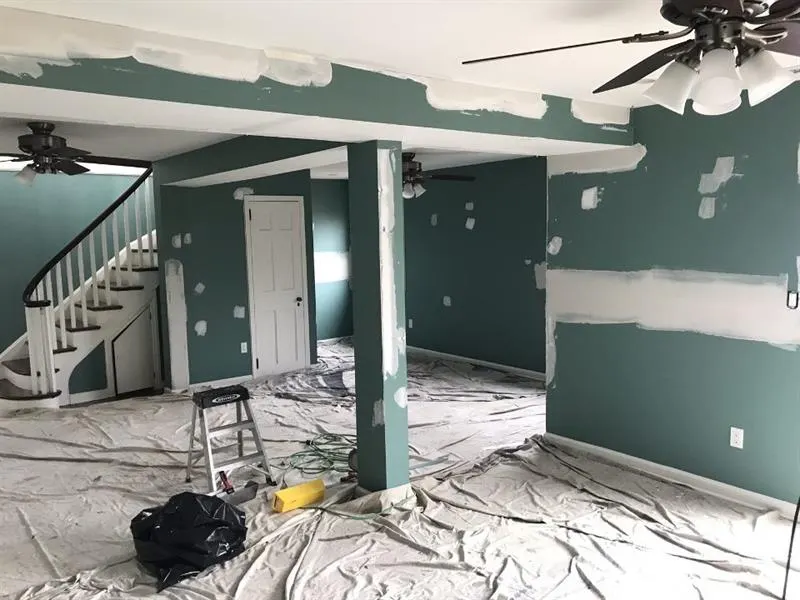
Every house moves. Most wall cracks are that movement showing up at the weakest point, and they are cosmetic. Some are not.
The ones that are cosmetic
Hairline cracks at corners, where two sheets of drywall meet, or where a wall meets a ceiling. Seasonal movement opens and closes these. They are annoying, not structural.
Nail pops: a small round bulge or a chipped circle where a fastener has backed out as the framing dried and shrank. Very common in the first few years of a house and after a dry winter.
Cracks radiating from the corners of doors and windows. These are stress concentration points and they crack first. Usually cosmetic.
Small impact holes. Doorknobs, furniture.
The ones worth investigating
Cracks wider than about a quarter inch, or ones where the two sides are no longer flush with each other.
Stair-step cracking in a masonry wall or foundation.
A crack that keeps coming back in the same place after being properly repaired. That is a wall telling you the movement has not stopped.
Cracks accompanied by doors that have stopped closing, sloping floors, or gaps opening at trim.
Any crack with staining around it. That is water, and water is the priority: patching over it hides an active leak.
None of these are painting problems. They want the cause identified first.
Why a patch that is only filled comes back
The most common bad repair is filler pushed into the crack and sanded flush. It looks perfect and it reopens within a year, because nothing is holding the two sides together: the filler is just a bridge across a joint that still moves.
A proper repair:
- Opens the crack up rather than filling it as found, so there is material to bond to
- Uses tape (paper or mesh) across the crack, bedded in compound. The tape is what resists the movement.
- Builds up in thin coats, each one dried and sanded, feathered wide. A patch that is feathered eight inches wide disappears; one feathered two inches wide shows as a bump under raking light.
- Is primed before painting. Fresh joint compound absorbs completely differently from the wall around it. Without primer it reads as a dull patch through the finish coat: the classic sign of a repair done in a hurry.
For nail pops, the fastener is driven or removed and a new one placed nearby, then the depression is filled: refilling over a loose fastener just pops again.
Texture
Matching an existing textured ceiling or wall is its own skill, and a patch that is flat in a textured field is as visible as one that stands proud. It is worth saying up front if the surface is textured.
More on our drywall repair page. Where a crack turns out to be movement in the structure, carpentry comes before either.
Planning a painting project?
Book a professional, no-pressure consultation with Genesis Pro Painting.
Schedule a Consultation