
Deck refinishing: solid stain or paint?
The real difference between solid stain, semi-transparent stain and paint on a deck, what each one costs you later, and how often to redo it.
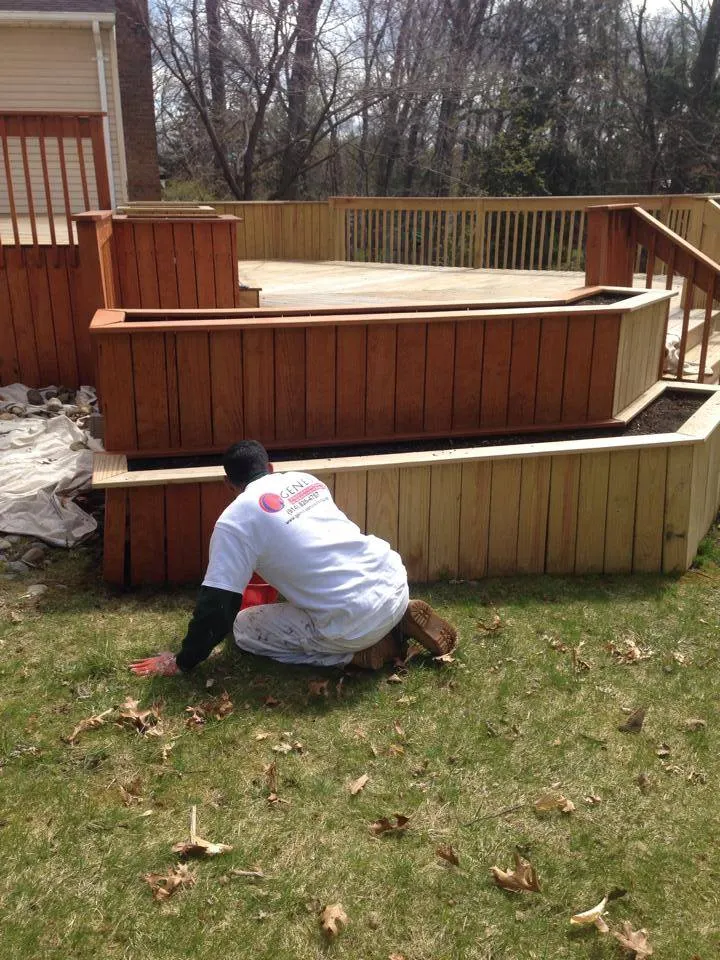
A deck is the hardest-wearing surface on a house. It takes full sun, standing water, snow load, and foot traffic, all on horizontal boards. Whatever goes on it is on a shorter cycle than anything else you own.
The choice of finish is really a choice about what the next job looks like.
Semi-transparent stain
Penetrates the wood and lets the grain show. It does not form a film, so it does not peel. It wears away, thinning gradually in the traffic paths and around the steps.
- Best for: decks in good condition where you want the wood to read as wood
- Lifespan: roughly 2 to 3 years on the deck floor
- Recoating: the easy case. Clean, and apply another coat. No stripping.
Solid stain
Opaque, so it hides the grain and covers weathered or mismatched boards. It sits mostly on the surface, which means it can peel where water gets under it, but far less aggressively than paint.
- Best for: older decks with boards that no longer match, or where you want a specific color
- Lifespan: roughly 3 to 5 years on the floor, longer on railings
- Recoating: clean, spot-scrape any failure, recoat. Manageable.
Paint
Forms the thickest film and gives the most color control and the hardest surface. On a deck floor it is also the least forgiving choice, because a film on a horizontal wet surface is the ideal condition for peeling, and once it peels, the next refinish starts with stripping.
- Best for: railings, risers, and vertical surfaces, or a floor already painted
- Lifespan on a floor: variable, and the failure mode is worse than the alternatives
- Recoating: the expensive case. Scraping or stripping a painted deck floor is most of the job.
The rule that matters
Once a deck is painted, it is painted. Going back to stain means stripping to bare wood, which is slow and rarely worth it. Going from stain to paint is easy. So if you are undecided, start with the one that keeps the door open.
Floors and railings do not need the same answer
The most durable combination is usually solid stain on the deck floor and paint on the railings and risers. The horizontal surface gets the finish that wears rather than peels; the vertical surfaces get the harder film, and they stay looking sharp much longer because they do not hold water.
What decides how long any of it lasts
- Cleaning and drying before coating. Same principle as washing before painting: a deck that is coated damp fails early, and a deck holds water longer than siding does.
- Board condition. Cupped, splintered, or soft boards need replacing first. Coating over a failing board is money spent twice.
- Fastener heads. Popped screws and nails tear the finish and let water in at every point.
- Sun exposure. A deck in full sun is on a shorter cycle than one under trees, but a deck under trees has the mildew problem instead.
More on process and preparation on our deck refinishing page.
Planning a painting project?
Book a professional, no-pressure consultation with Genesis Pro Painting.
Schedule a Consultation