
Rot and carpentry repair before painting
Where exterior wood fails first, how to tell repair from replacement, and why paint over soft wood is money spent twice.
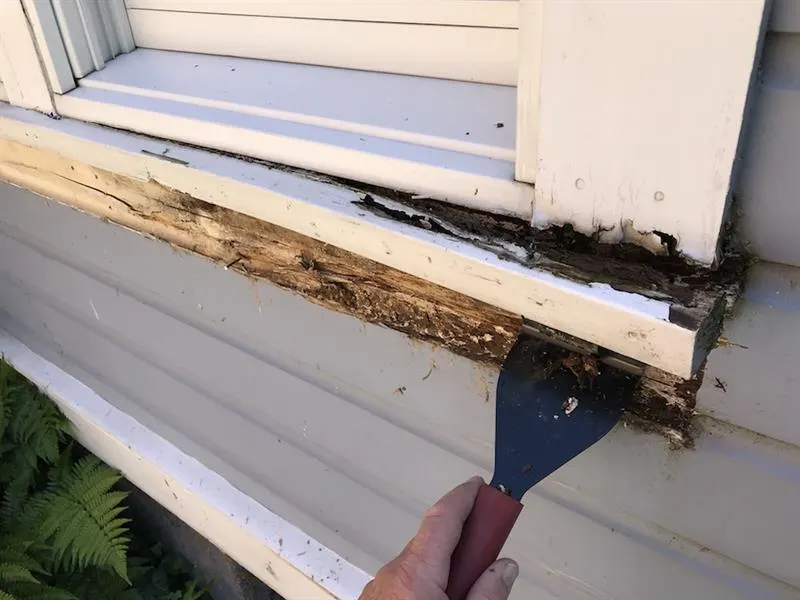
Almost every exterior project turns up some wood that needs attention. On a house over thirty years old, none is the surprise.
Paint does not stop rot. It slows water getting in, and once water is already in, a fresh coat seals it there and accelerates what is happening underneath.
Where it starts
Water follows gravity and sits on horizontal surfaces, so failure is predictable:
- Window sills: the classic. Water sits on the sill and works into the end grain.
- Trim ends and butt joints, especially at corner boards where two pieces meet.
- Fascia behind gutters. Most rotted fascia is a gutter that overflowed for two seasons.
- The bottom of corner boards and door casings, where water splashes up and wicks in.
- Deck ledgers and post bases, which are a structural question as well as a finish one.
- Anywhere a plant touches the house. Foliage holding moisture against wood is remarkably destructive.
How to check
Press a screwdriver into the suspect area. Sound wood resists. Rotted wood gives, and the tip goes in without much force. Soft wood that has not visibly failed yet is the important find. It looks paintable and it is not.
Tap along a board: solid wood rings, punky wood thuds.
Repair or replace
Repair (with an epoxy consolidant and filler) works for localised damage in a member that is otherwise sound, and it is genuinely durable when the damage is contained. It is the right answer for a small area of a sill or a decorative element that would be hard to reproduce.
Replacement is right when the damage runs through the piece, when a joint has opened, or when the rot has reached the structure. Patching a board that has failed along its length is a repair you will pay for twice.
The judgment is not aesthetic. It is whether there is sound material left to bond to.
Fix the cause, not just the wood
New wood in the same place fails the same way if nothing changed. That usually means:
- Clearing or re-pitching the gutter above it
- Re-caulking the joint that let water in
- Cutting back the plant that was holding damp against the siding
- Correcting flashing that was directing water into rather than off the wall
Then, and only then, prime
Bare wood (new or repaired) gets primed on all faces before it goes up, including the back and the cut ends. End grain drinks water, and a board primed only on the face is a board that will rot from behind.
What it means for a quote
An exterior proposal should say what repair is included and what happens if more is found once the surface is opened up. Every older house has some. What matters is that the answer is a process rather than a promise that it will not happen.
More on our carpentry repair page.
Planning a painting project?
Book a professional, no-pressure consultation with Genesis Pro Painting.
Schedule a Consultation