
Painting kitchen cabinets: what actually makes it last
Why cabinet refinishing is a prep job rather than a paint job, what can and cannot be refinished, and how to tell a proper cabinet finish from a fast one.
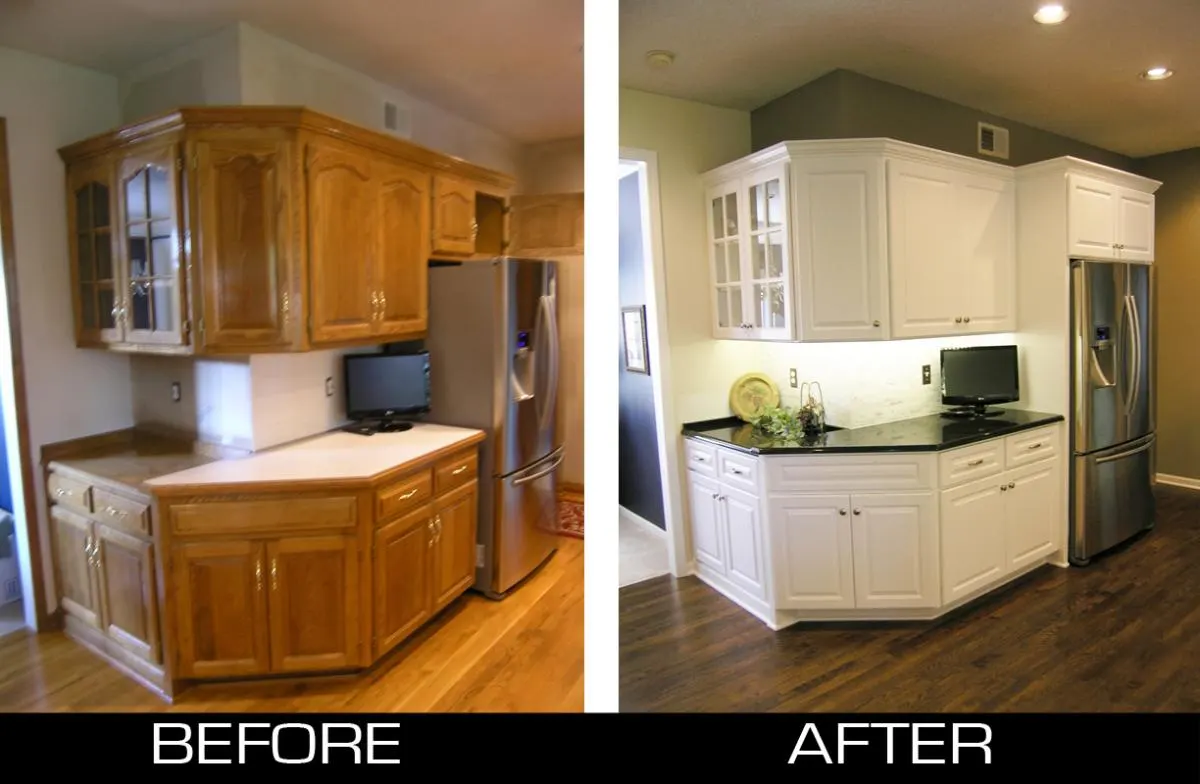
Cabinets are the hardest finish in a house to get right. They are touched constantly, they get grease and water on them, and they are inspected from eighteen inches away in good light. Wall paint standards do not survive that.
Refinishing existing cabinets is usually a fraction of the cost of replacing them and it changes a kitchen completely. But it only works if the process is right, and the shortcuts are invisible for about six months.
What decides the price
Not the size of the kitchen: the number of doors and drawers. A galley kitchen with forty doors is more work than a large kitchen with twenty. On top of that:
- The condition of the existing finish, and how much degreasing and sanding it needs
- Whether stained wood is moving to a painted finish, which takes considerably more prep than a repaint over existing paint
- Wood repairs, loose joints, and hinge or hardware replacement
- Whether the finish is sprayed or brushed
- Whether hardware is reused or changed, and whether new holes have to be filled and drilled
What can and cannot be refinished
Solid wood and MDF doors refinish well. So do most factory-finished cabinets, once properly de-glossed.
Thermofoil (the vinyl film wrapped over MDF) is the difficult one. If the film is lifting, paint will not fix it, and coating over a peeling wrap just moves the problem.
Laminate can be done with the right bonding primer, but it is a specific process, not a normal repaint.
Being honest about which category your cabinets fall into is the first thing that happens on the walkthrough.
The process, and why each step is there
Degrease first, and thoroughly. Kitchen cabinets carry a film of cooking oil that is invisible and everywhere, heaviest around the range and above the dishwasher. Sanding over it drives it into the surface and nothing will bond properly afterwards.
Label everything. Doors go back on the box they came off. Cabinet openings are not identical, and a door hung on the wrong opening never sits right.
Sand to profile, not to bare wood. The goal is a mechanical key for the primer, not stripping.
Prime with a bonding primer. This is where adhesion is won or lost. A wall primer on cabinets is the single most common reason a refinish chips at the edges within a year.
Spray the finish. Cabinet enamel sprayed off the house, in a controlled space, is what produces a factory-flat surface. Brushed cabinets can look fine, but the door edges and rails are where brush marks collect.
Let it cure before use. This is the step people skip. Enamel is dry to the touch long before it is hard. Doors rehung and slammed on day two carry that mark permanently. We build cure time into the schedule rather than rushing hardware back onto a soft finish.
Sheen
Satin or semi-gloss, in a cabinet-rated enamel. Semi-gloss on islands and vanities, which take the most water and contact. Flat cabinet paint exists and it looks beautiful in photographs; it does not survive a working kitchen.
How long it takes
Most kitchens run about one to two weeks, depending on door count, the amount of prep and repair, and the number of coats: with cure time built in.
More on the full process on our cabinet refinishing page.
Planning a painting project?
Book a professional, no-pressure consultation with Genesis Pro Painting.
Schedule a Consultation