
What kind of paint to use in a bathroom
Bathrooms fail paint faster than any other room in the house. What to use on the walls and ceiling, and the prep that actually prevents peeling.
A bathroom is the hardest room in the house on a paint job. Steam condenses on every cold surface, the extractor rarely keeps up, and the walls get splashed, wiped, and hit with cleaning products. Paint that would last a decade in a bedroom can start peeling above a shower in two years.
Wall paint
Use something that can be cleaned and that resists moisture. In practice that means satin or semi-gloss, not flat.
Flat paint looks beautiful in a powder room and is a reasonable choice there, because a half bath has no shower and no steam. In a full bathroom it is a false economy: the first time someone wipes a splash off the wall, the flat finish burnishes and leaves a shiny patch that will not blend out.
Many manufacturers make a bathroom-specific line with added mildew resistance. It is worth using where the room genuinely runs wet.
Ceiling paint
The bathroom ceiling is where failures start, because it is the coldest surface and steam rises. A dead-flat ceiling paint will hold up in a well-ventilated bathroom. In a room that steams heavily, or one with a weak fan, step the ceiling up to a low-sheen product rated for moisture.
Trim, doors, and vanities
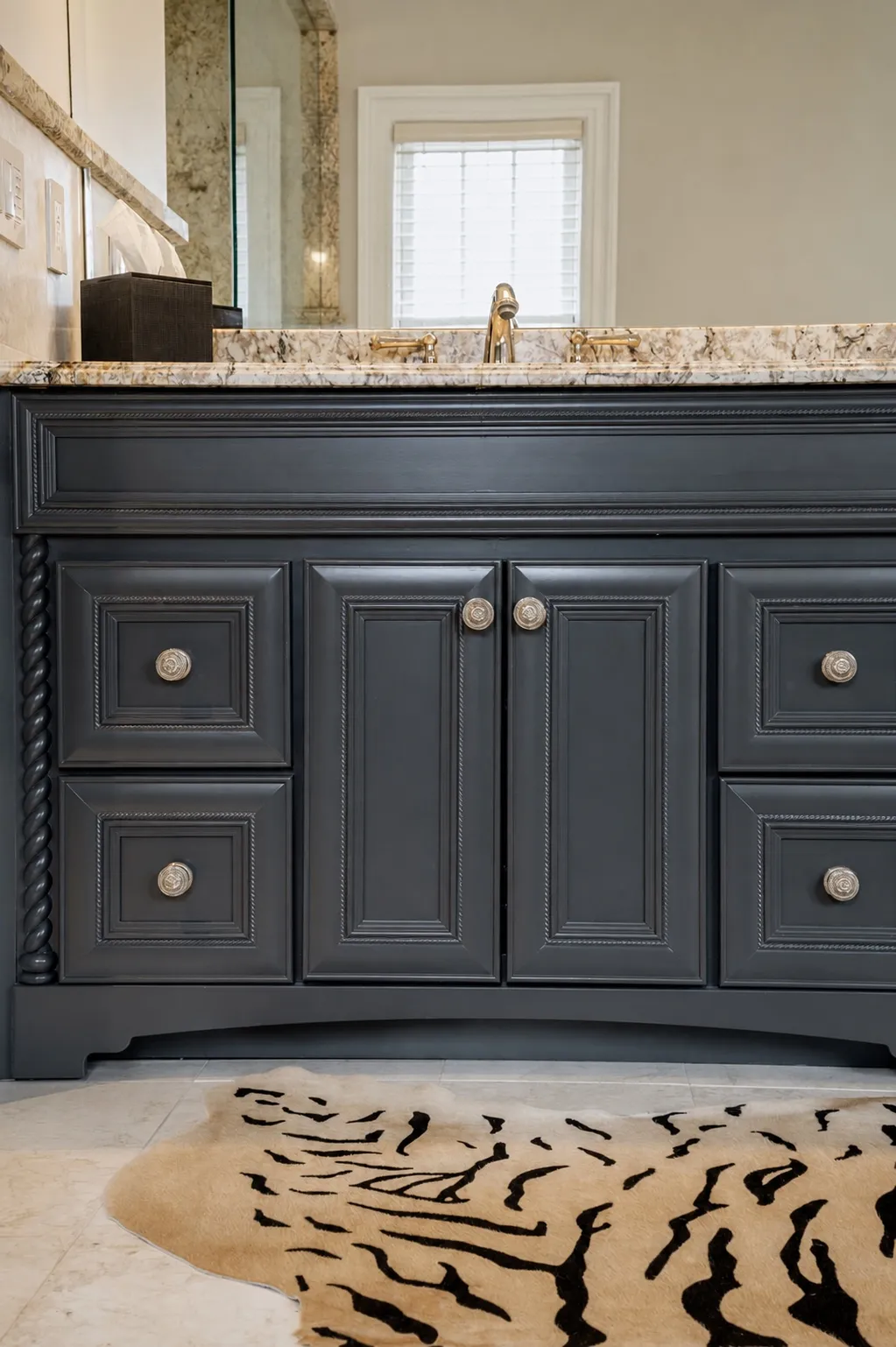
Semi-gloss. Trim in a bathroom takes water directly and gets cleaned often, and semi-gloss is the finish that survives both. A vanity is really cabinetry. It wants a cabinet-grade enamel, degreasing, and proper sanding, not wall paint.
Prep is what actually decides it
Product choice matters less than what happens before it goes on. In a bathroom:
- Fix the ventilation question first. No paint survives a room where steam has nowhere to go. If the fan is undersized or vents into an attic, that is a real problem and painting over it just resets the clock.
- Clean before sanding. Bathrooms carry a film of soap, hairspray, and cleaning residue. Sanding that in guarantees adhesion problems.
- Treat mildew, do not paint it. Mildew has to be killed and washed off. Coating over it hides it for one season.
- Cut out failed paint properly. Where paint has peeled above a shower, the edges have to be scraped back to sound material and the transition feathered, or the new coat lifts at the same line.
- Prime bare or repaired areas. Patched drywall and bare joint compound absorb differently from the wall around them, and it shows through the finish coat as a dull patch.
The short version
Satin or semi-gloss on the walls, a moisture-rated ceiling product if the room steams, semi-gloss on trim, and cabinet enamel on the vanity, but spend the effort on ventilation, cleaning, and cutting back failed edges, because that is what determines whether the job lasts.
It is part of what we scope on an interior painting walkthrough.
Planning a painting project?
Book a professional, no-pressure consultation with Genesis Pro Painting.
Schedule a Consultation