
Accent walls, texture, and finishes with character
When an accent wall works and when it dates a room, plus what modern textured and specialty finishes actually involve.
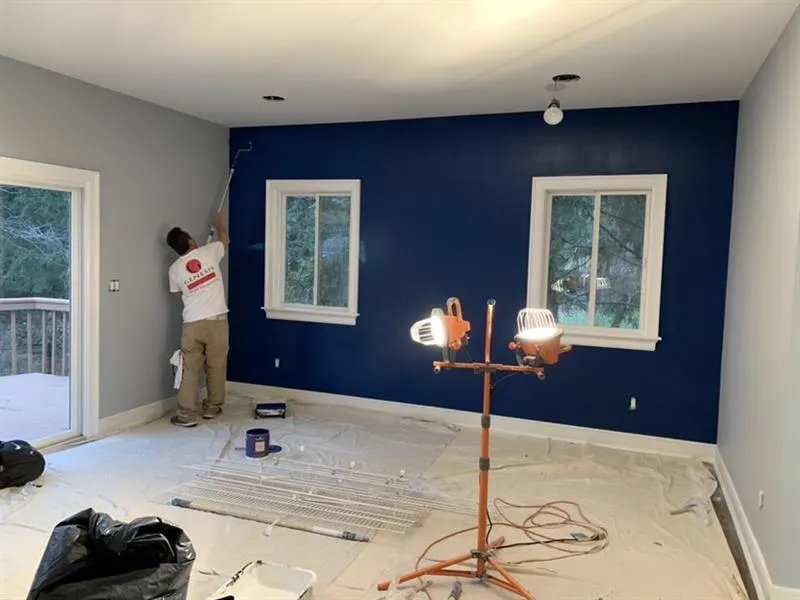
The accent wall has been declared over roughly once a year for a decade and it keeps not dying, because when it is done for a reason it works.
When an accent wall works
When the wall is already the focus. A fireplace wall, the wall behind a bed, the end of a long room. The color is reinforcing something architectural, not inventing emphasis where there is none.
When it corrects proportions. A darker color on the far wall of a long narrow room pulls that end closer and squares the space up. That is a real effect and a good reason.
When it contains an alcove or a niche. Painting the inside of a bookcase or a recess a deeper tone gives it depth and makes the shelving read as intentional.
When it dates a room
When it is one random wall in a square room with nothing on it. That is the version that reads as a decorating decision from 2008.
When the contrast is very high and the rest of the room is plain. A single saturated wall against four white ones fights everything else.
When it competes with art or a view. The wall wins, and it should not.
The quieter alternative
Increasingly the better move is a whole room in the deeper color, trim included, rather than one wall. It reads as considered rather than as a compromise, and small rooms genuinely benefit: see how color changes a room.
The other alternative is texture rather than contrast: the same color in a different finish. A sheen change between wall and trim, or a matte wall against satin millwork, gives definition without a color break.
Specialty and textured finishes
These come back into fashion in cycles and they are worth understanding before committing, because they are much harder to undo than paint.
Limewash and mineral finishes produce a soft, cloudy depth. They are genuinely beautiful on the right wall and they are a different craft from painting. They also cannot be touched up invisibly: a repair means redoing the wall.
Venetian plaster and polished finishes are multi-layer, highly labor-intensive, and spectacular in the right room. Cost scales with the number of passes.
Faux finishes (ragging, sponging, suede effects) dominated the late 1990s and read as of their period now. Occasionally right in a period house; rarely right in a contemporary one.
Textured paint covers imperfections but commits you permanently. Removing it later means skimming the whole wall.
Wallpaper as the accent
Often the better answer than paint. A single papered wall carries pattern and depth that paint cannot, and it is a defined, reversible decision. More on our wallpaper installation page.
Whichever direction, the wall underneath has to be flat first: texture and sheen both amplify what is under them rather than hiding it.
Planning a painting project?
Book a professional, no-pressure consultation with Genesis Pro Painting.
Schedule a Consultation